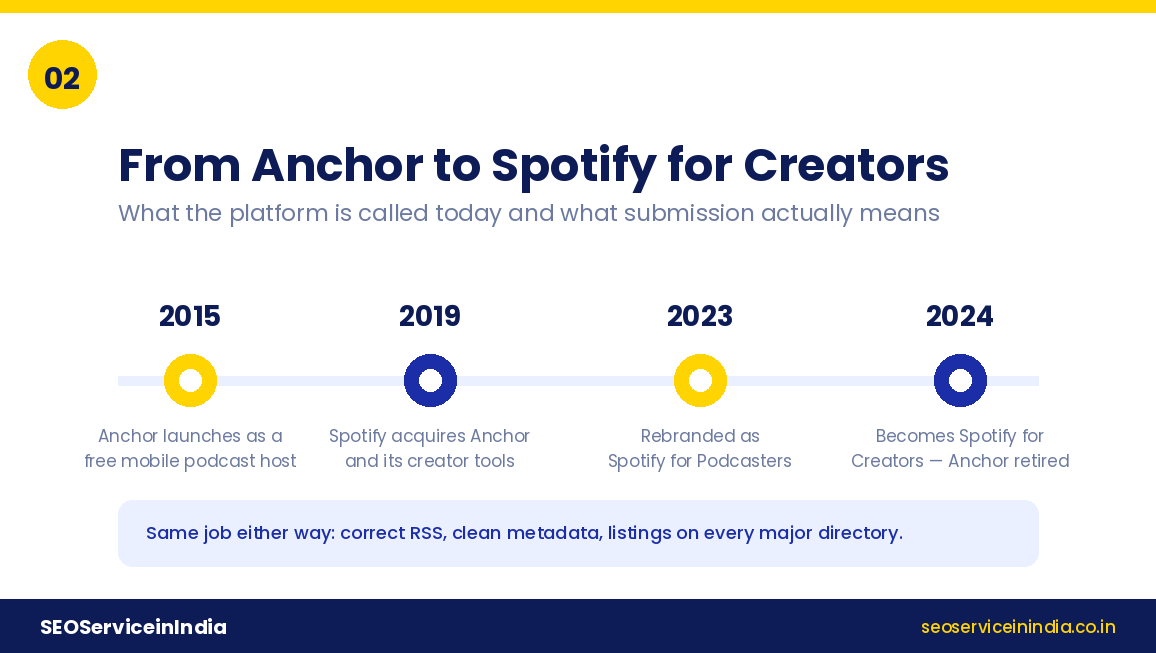
Anchor launched in 2015 as a free, mobile-first podcast host and quickly became the easiest on-ramp in the industry. Spotify acquired it in 2019. In March 2023 the Anchor name was retired and the platform became Spotify for Podcasters. In November 2024 it was renamed again to Spotify for Creators. Existing shows were migrated automatically, old Anchor.fm links redirect, and creators now sign in with a Spotify account.
So if you are looking for Anchor, you have not lost anything — the hosting still exists, it simply lives under a different name inside Spotify's creator ecosystem. What has changed is the emphasis. The platform is now built Spotify-first: the analytics, the monetisation programmes and the promotional tools are all oriented around Spotify listeners, and some of the old Anchor creation features have been retired along the way.
Why people still search for Anchor podcast submission
Brand memory outlasts brand changes. Thousands of tutorials, course modules, YouTube walkthroughs and blog posts still say "upload to Anchor", so that is still the phrase people type. We built this page around the term you actually searched rather than pretending the confusion does not exist. If you arrived here from a two-year-old tutorial, you are in the right place — the workflow is the same, the logo is different.
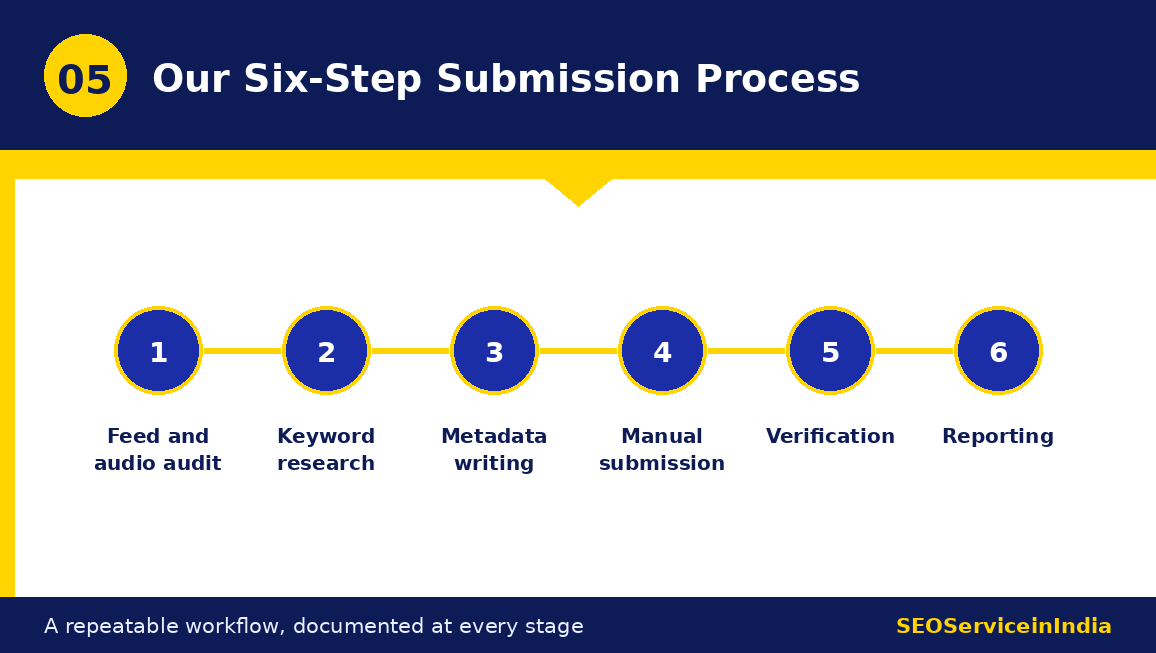
What actually happens when we submit your show
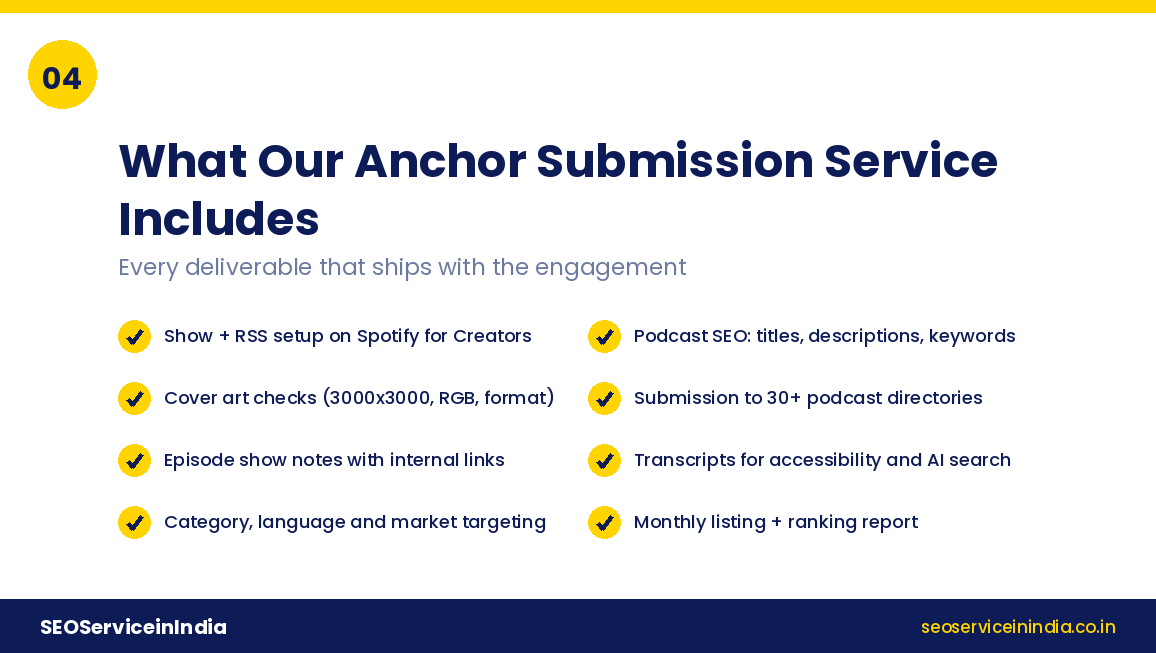
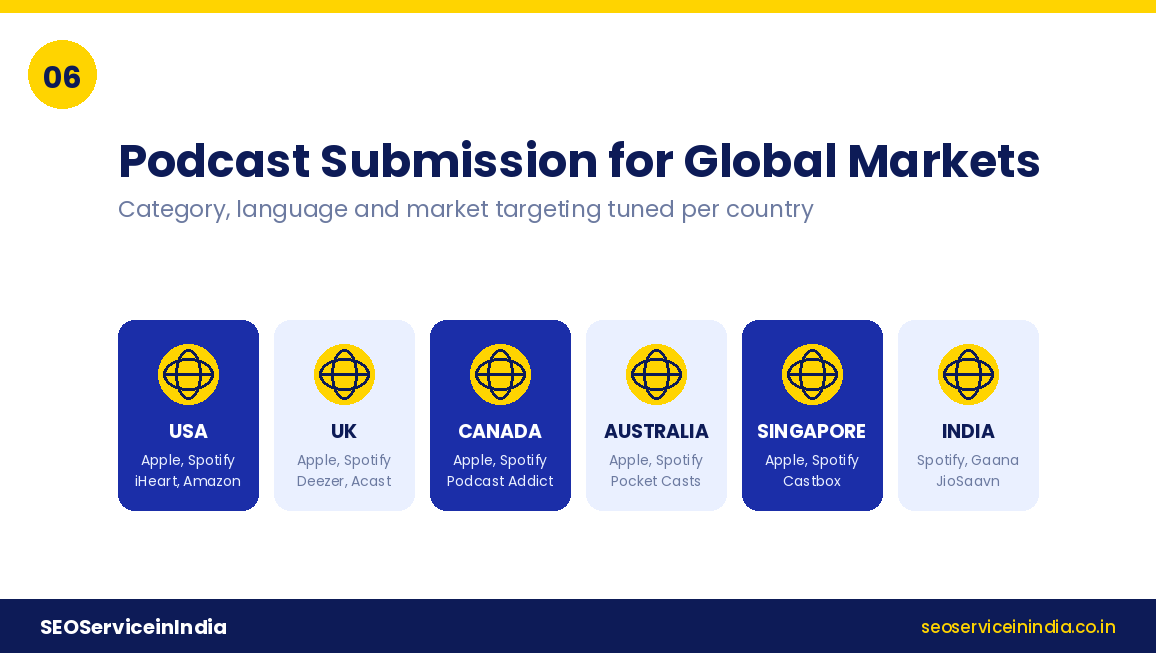
Podcast submission is often misunderstood as uploading a file to each app one by one. It is not. Your host generates a single RSS feed — an XML file that carries your show title, description, categories, artwork, language, author details and every episode. Directories read that feed and mirror it. Submit the feed once to each directory and every future episode appears automatically.
That means the quality of the feed determines the quality of every listing you will ever have. A missing category, a mistyped author name, artwork at the wrong resolution or an unset explicit tag can get a submission rejected or leave the show buried in the wrong section of an app. Getting the feed right the first time is the entire job, and it is where most DIY submissions fail.