Cyber Security PPC
Why Cyber Security Google Ads Fail Without Specialist Management
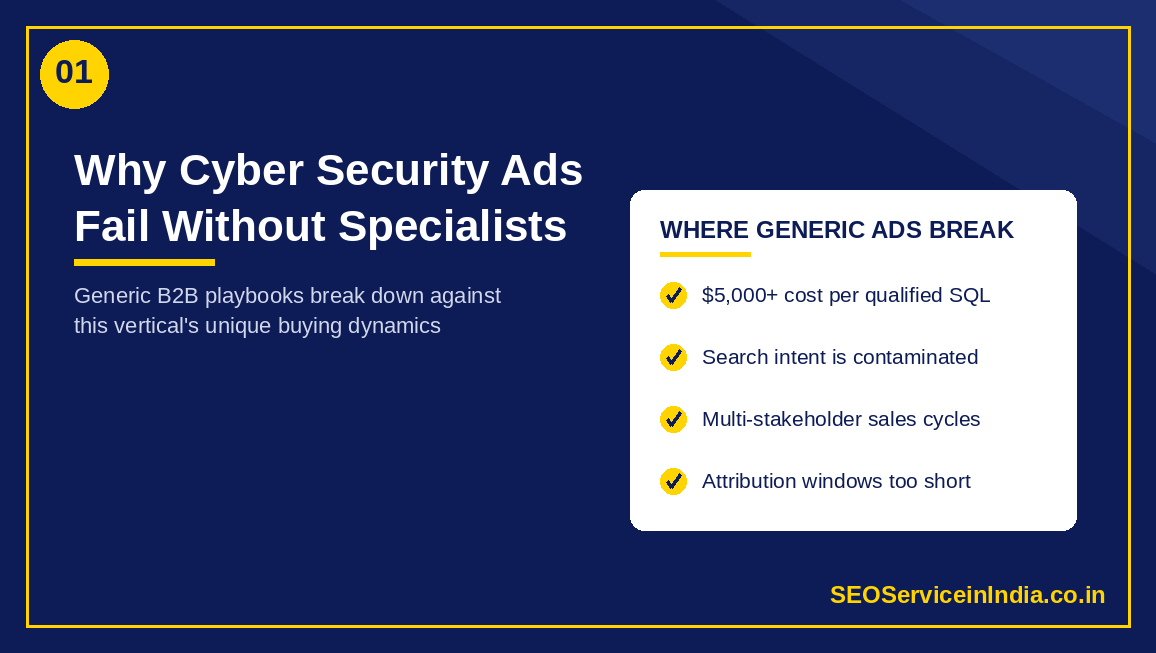
Most agencies apply a generic B2B playbook to security advertising. It breaks for three reasons.
The auction is brutal and unforgiving. With a $20 average click, a 2% conversion rate and a 20% SQL rate, you are paying roughly $5,000 for one sales-qualified lead. Cost per SQL in this vertical commonly runs from $1,200 to $3,500 depending on the offer and market. A generalist agency wasting 40% of spend on irrelevant traffic is not inefficient — it is fatal to the campaign.
The search intent is contaminated. "Penetration testing" attracts students looking for tutorials. "SOC analyst" attracts job applicants. "Ransomware" attracts panicked consumers with a locked laptop, not enterprises with an incident response retainer. Without a deliberately engineered negative-keyword architecture, a security account fills with traffic that will never buy.
The sales cycle outlasts the attribution window. Security buying decisions involve a CISO, a procurement team, a legal review and often a board sign-off. Six to eighteen months is normal. If Google's bidding algorithm only ever sees form submissions, it will optimise toward whoever fills forms most — which is usually the least serious segment of your market.
The Google Ads Policy Problem Nobody Warns You About
This is the section most competitor pages leave out, and it is the one that costs security advertisers the most time.
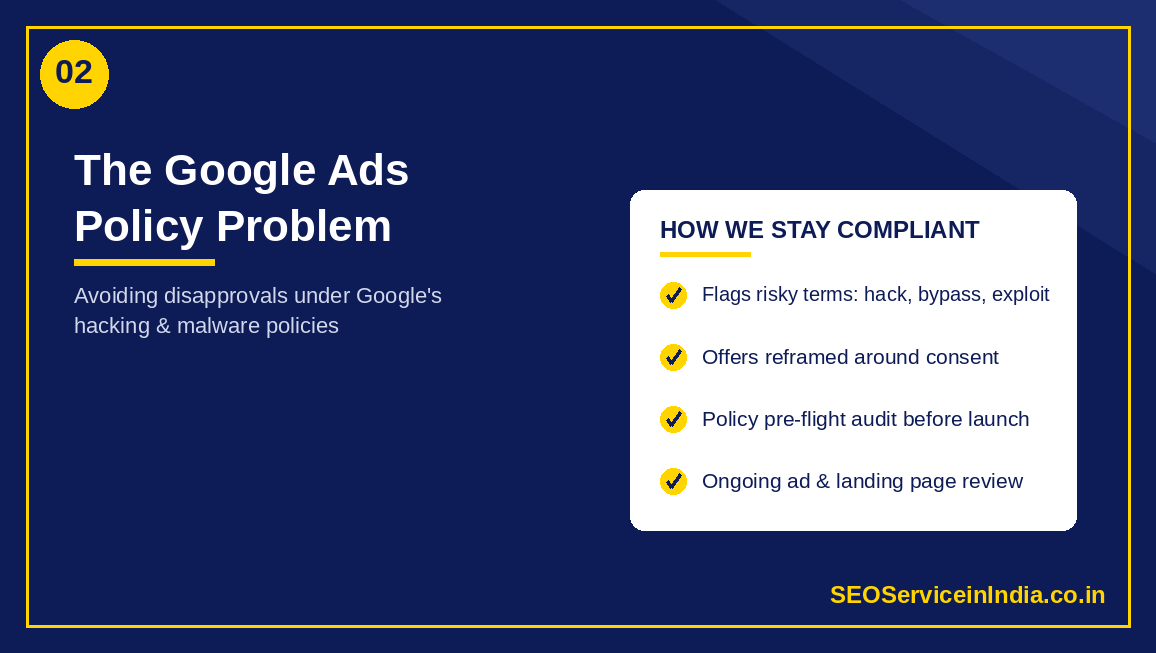
Google's Enabling Dishonest Behavior, Malicious or Unwanted Software and Compromised Sites policies were written to stop hacking tools, spyware and credential-theft services from advertising. They are enforced largely by automated review. Legitimate offensive-security firms get caught in that net constantly.
Ad copy or landing page language such as "hack any network", "bypass security controls", "access their systems", "crack passwords" or "exploit vulnerabilities" — perfectly accurate descriptions of authorised red-team work — will trigger disapprovals. Some advertisers lose entire accounts before they understand what happened.
We solve this by rewriting the offer around authorisation and consent rather than capability. The service is not "we break into networks"; it is "authorised, scope-defined security testing performed under written client consent, delivered with a remediation roadmap". The same service, described in language that survives review.
For every account we take on, we run a policy pre-flight audit before a single ad goes live: ad copy, sitelinks, landing pages, downloadable assets and demo pages are all checked against current policy. If a disapproval does happen, we handle the appeal and the rewrite — and we document what triggered it so the whole account learns from it.